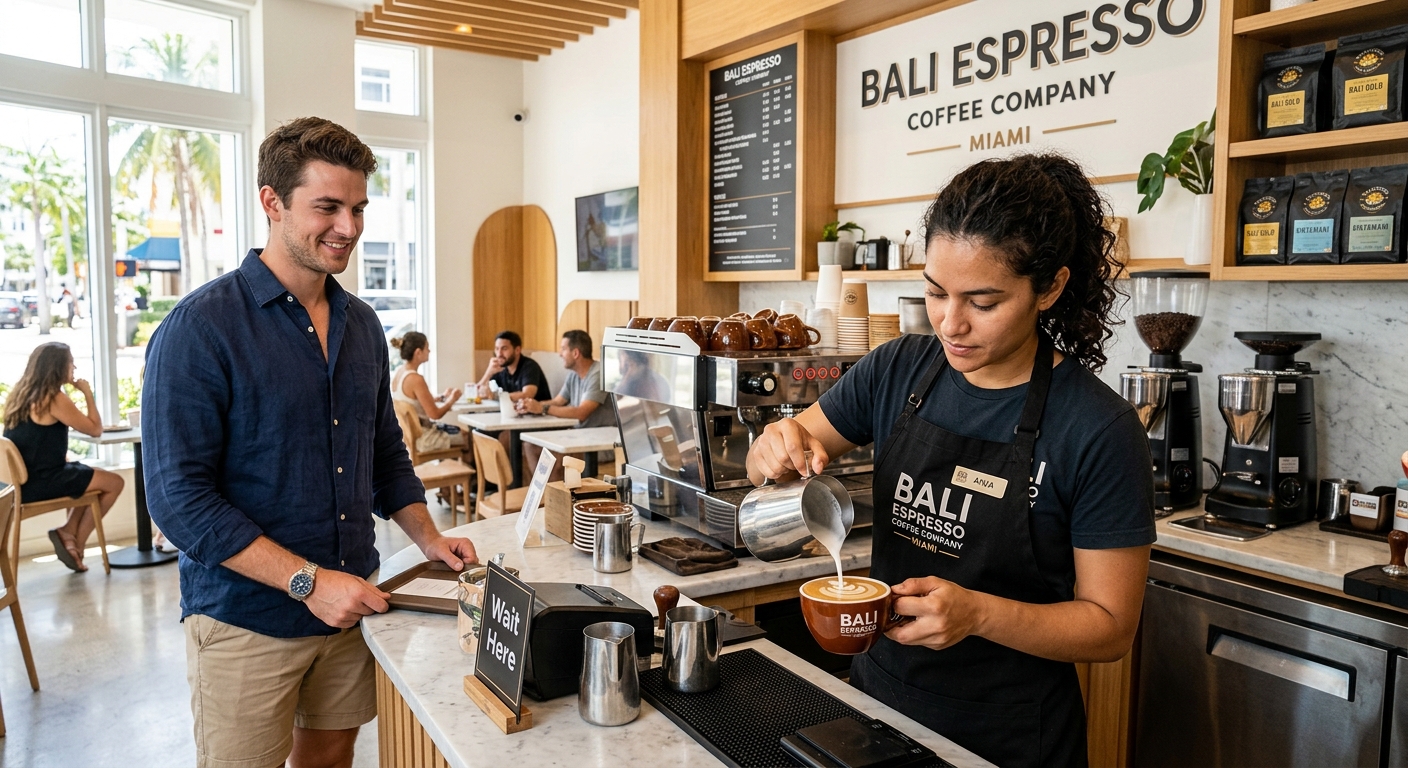
When we onboard a new wholesale café, the goal is never the single best shot a champion barista can pull under lab conditions. It is the most consistent shot a real bar can pull two hundred times a day with a line out the door. Those are different targets, and confusing them is how a great coffee ends up tasting mediocre in the cup. Everything we do on a dial-in is aimed at the second one.
We start from a forgiving recipe: 18 grams in, 38 grams out, 27 to 30 seconds at 93°C. That roughly 1:2 ratio and slightly longer window gives your team margin. A grind that drifts a click through the day, a tamp that is a little uneven on the rush - the recipe absorbs it instead of collapsing into a sour or bitter shot that gets remade and thrown away. Waste is a consistency problem before it is a cost problem.
Origin choice matters more than most bars expect. For milk-forward menus we build the espresso around Toraja, whose low, maple-heavy body stays legible in a twelve-ounce latte. If your program leans black - cortados, straight shots, a serious espresso crowd - we reach for Kintamani for more clarity and lift. We decide that together at the dial-in, against your actual menu, not by default.
Water is the invisible variable that wrecks consistency. Two cafés three blocks apart can pull completely different shots off identical beans because their water hardness differs. Part of every onboarding is checking your water and, where needed, recommending filtration targets, so the recipe we leave you actually holds on your machine rather than only on ours.
Finally, we write it down and we come back. Every new account leaves the dial-in with a printed recipe card - dose, yield, time, grind reference - and we re-check as the beans settle over the first two weeks. When you change grinders or your volume jumps for a season, we re-dial on the house. Consistency is not a one-time setup. It is a standing relationship, which is exactly how wholesale should work.
